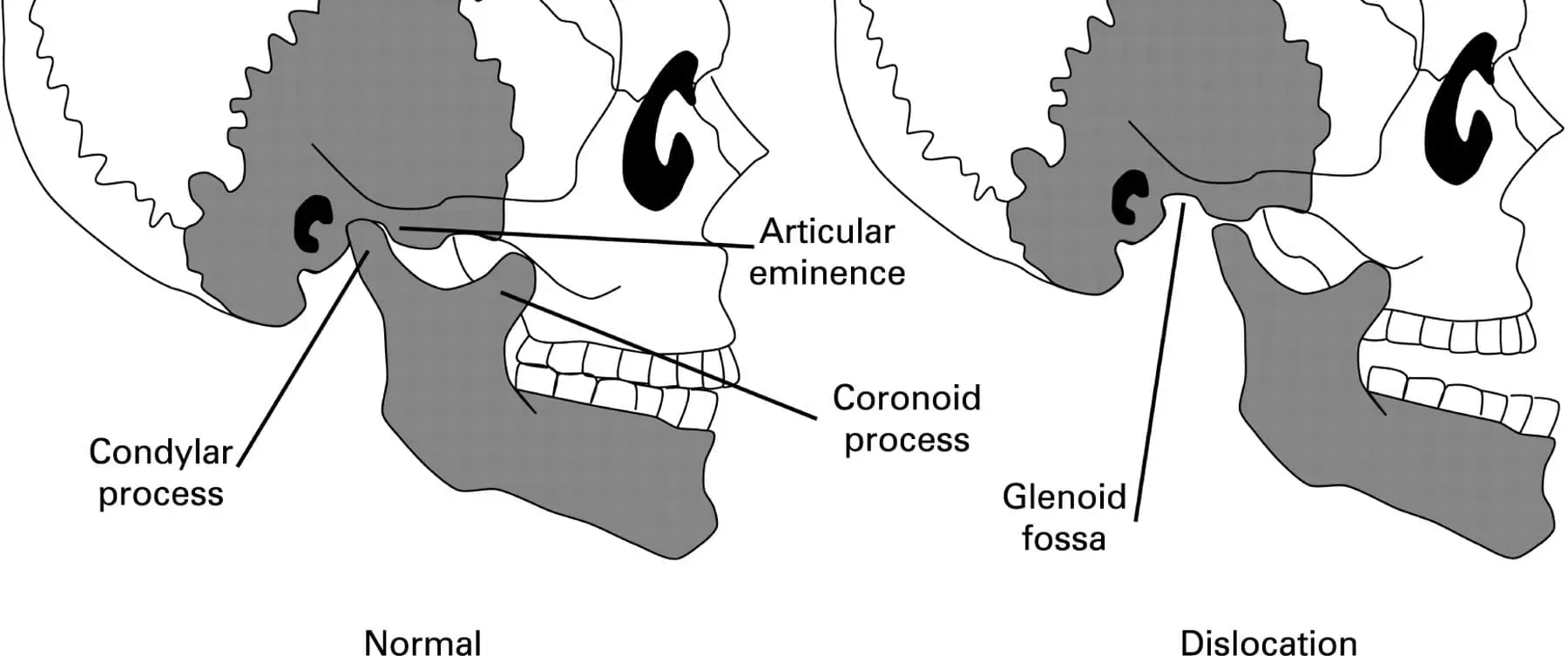
A JAW DISLOCATION CAN BE A VERY PAINFUL INJURY AND IMPACT YOUR FUNCTION GREATLY.
Dislocations can happen once or can reoccur several times to one or both TMJ joints at a time.
What causes a Dislocated Jaw?
Like any other joint, problems happen when joint structures (disc, ligaments, muscles, bones) don’t work correctly or are damaged. Sometimes this results in a dislocated jaw.
Some causes of these structural or functional changes include:
- Wide opening of the mouth (yawning, laughing, big bite of food, vomiting, seizures)
- Dental treatments
- Intubation associated with surgery
- Trauma to the jaw
- TMJ arthritis
- General ligament laxity
What are the symptoms of a dislocated jaw?
Inability to close/open your mouth
Misalignment of the jaw, lips, and/or teeth
Pain – worse with jaw movement
Difficulty speaking
Drooling
What will Jaw Dislocation treatment involve?
If your TMJ is still dislocated and can’t return to its normal position, it will need to be reduced (put the joint back in its normal position) by a doctor in hospital. Following this, you may be sore for several weeks. The recovery from TMJ fracture can be lengthy and should be guided by a doctor and your physiotherapist.
After the TMJ has been reduced, a Pivotal Motion physiotherapist can speed recovery and ease pain with TMJ dislocation treatment.
Physiotherapy treatment may involve:
- Education on preventing future dislocations
- Types of foods to avoid
- Jaw positions to avoid
- Correcting jaw alignment
- Addressing weak or tight muscles
- Individualised home exercise program
- Treatment of your neck to assist with positioning
We can help
Jaw dislocation treatment is a special interest to our principle physiotherapist Bobbie-Jo Strong and she will be eager to help with your recovery. For more information on jaw physiotherapy call 07 3352 5116 to book a consultation or book online today.